
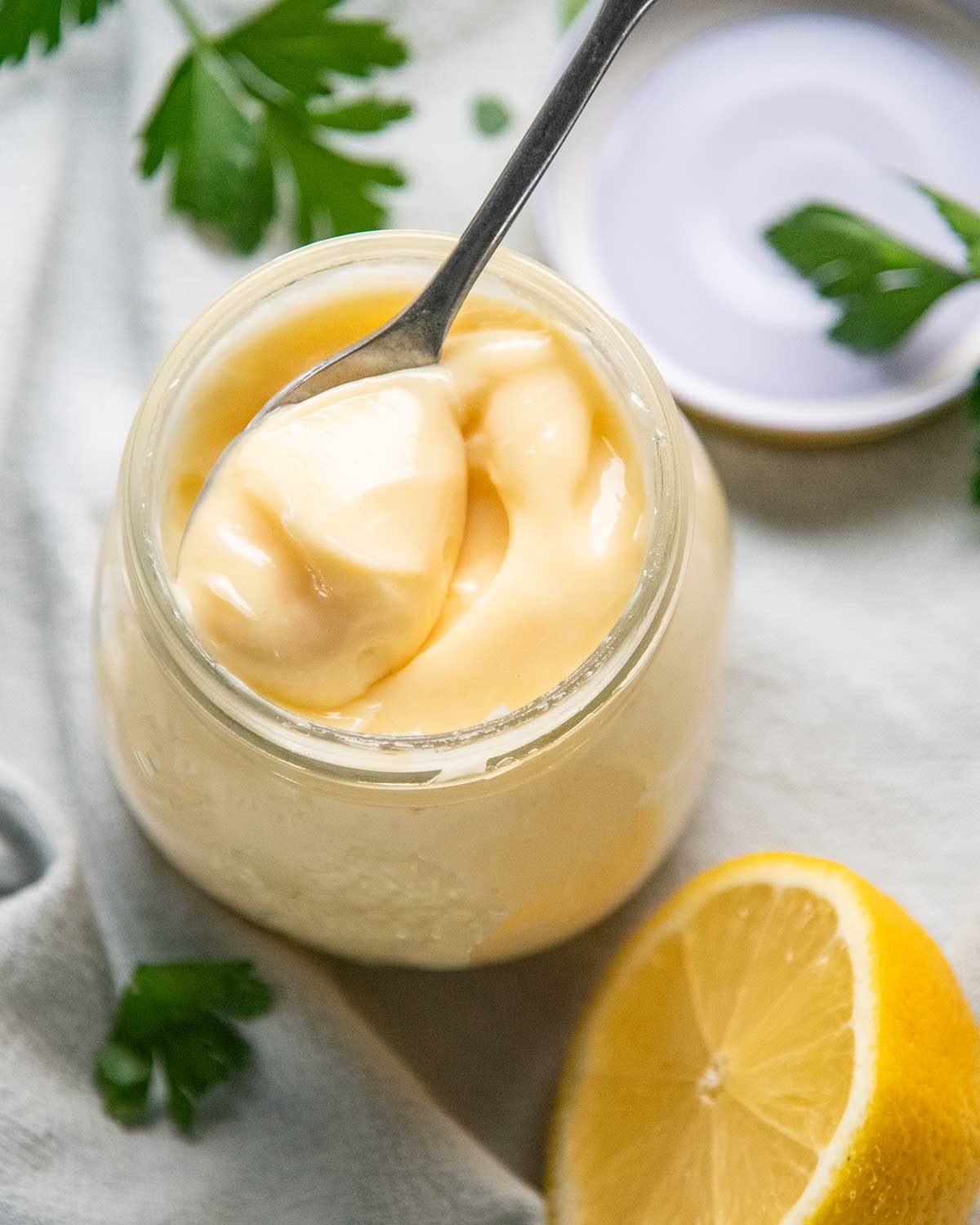
This is my homemade mayonnaise recipe. I use an electric beater which is unorthodox, but I find it more foolproof than every other method I’ve tried – stick blender, food processor, blender. It’s essentially hand whisking, except the hand mixer does the work!
Homemade mayonnaise recipe
Homemade mayonnaise is a thing of beauty. You’d never catch me dipping bread into a store-bought jar, but you’ll struggle to stop me with homemade! It’s creamier, softer and more luxurious, without that oily slick coating your mouth.
If you’ve steered clear of making mayonnaise because you think it’s tricky, let me change your mind. It can be finicky because you’re asking oil and water-based ingredients – not natural friends – to become one thick, creamy mixture. Sometimes they refuse to play nicely and the mayonnaise splits.
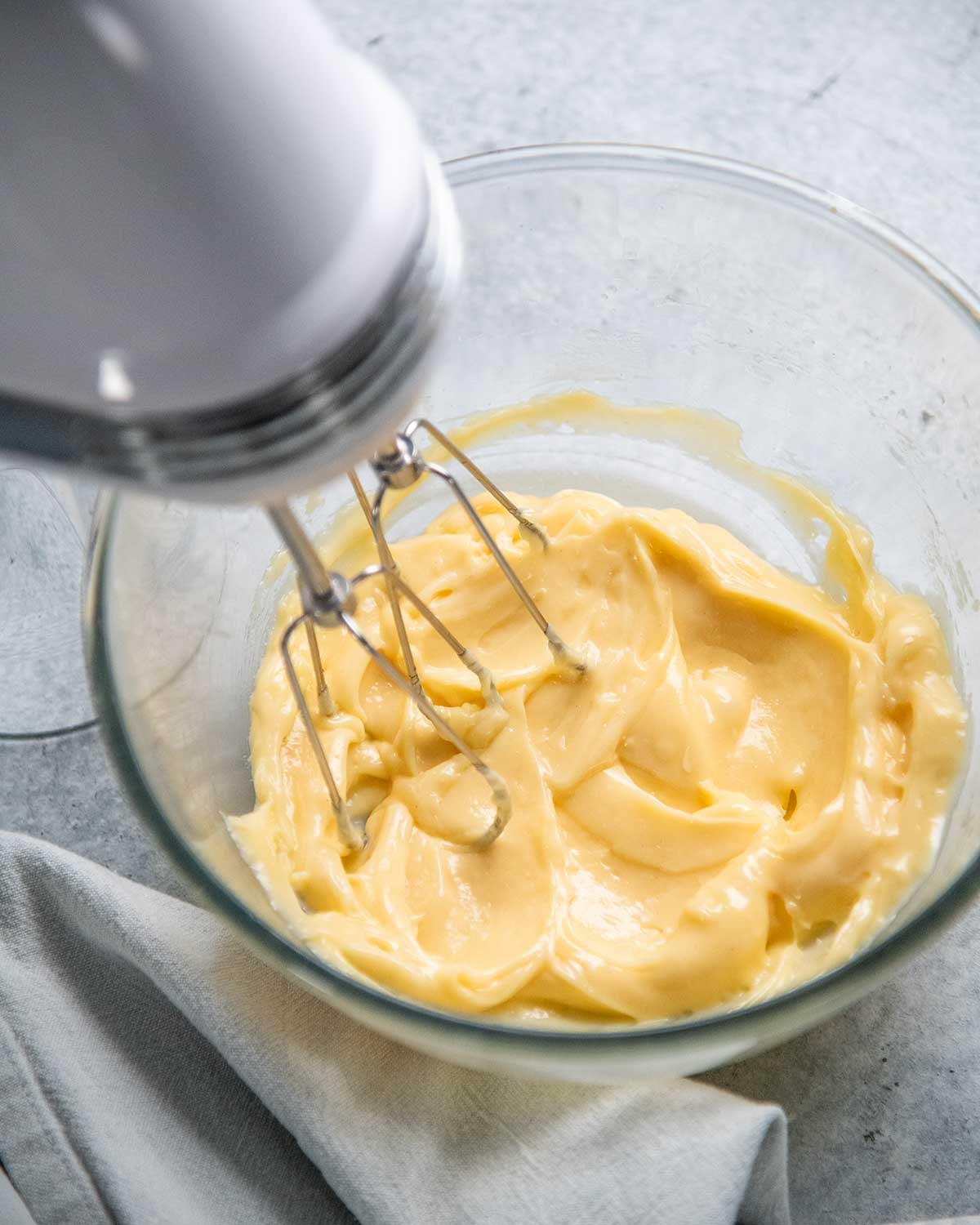
But I use a very reliable method – an electric beater, which I find more foolproof than a stick blender, food processor or blender. It’s essentially hand whisking, but more reliable and much less strenuous!
Put it this way: I’ve split mayonnaise using every other method. I’ve never split mayonnaise using a hand mixer. 🙂
mayo-making intel and Troubleshooting
I have a lot to say about mayonnaise making, having made an exorbitant amount leading up to doing today’s post. In particular, why I use a handheld beater over the more common methods of a stick blender or food processor, and why they are more prone to problems.
To avoid cluttering the recipe with food nerd details, I’ve put all the extra tips, troubleshooting and mayonnaise-making intel in the FAQ below, just above the video.
Ingredients in Mayonnaise
Here’s what you need to make mayonnaise. I only use the egg yolk which makes mayonnaise creamier and more luxurious. This is the default way most chefs and restaurants make a classic mayonnaise. Some recipe use a whole egg which noticeably dilutes the mayonnaise (given whites are mostly water), making it lighter and looser. This recipe will work for either.
But if I’m making mayonnaise from scratch, I want the good stuff – yolk only!
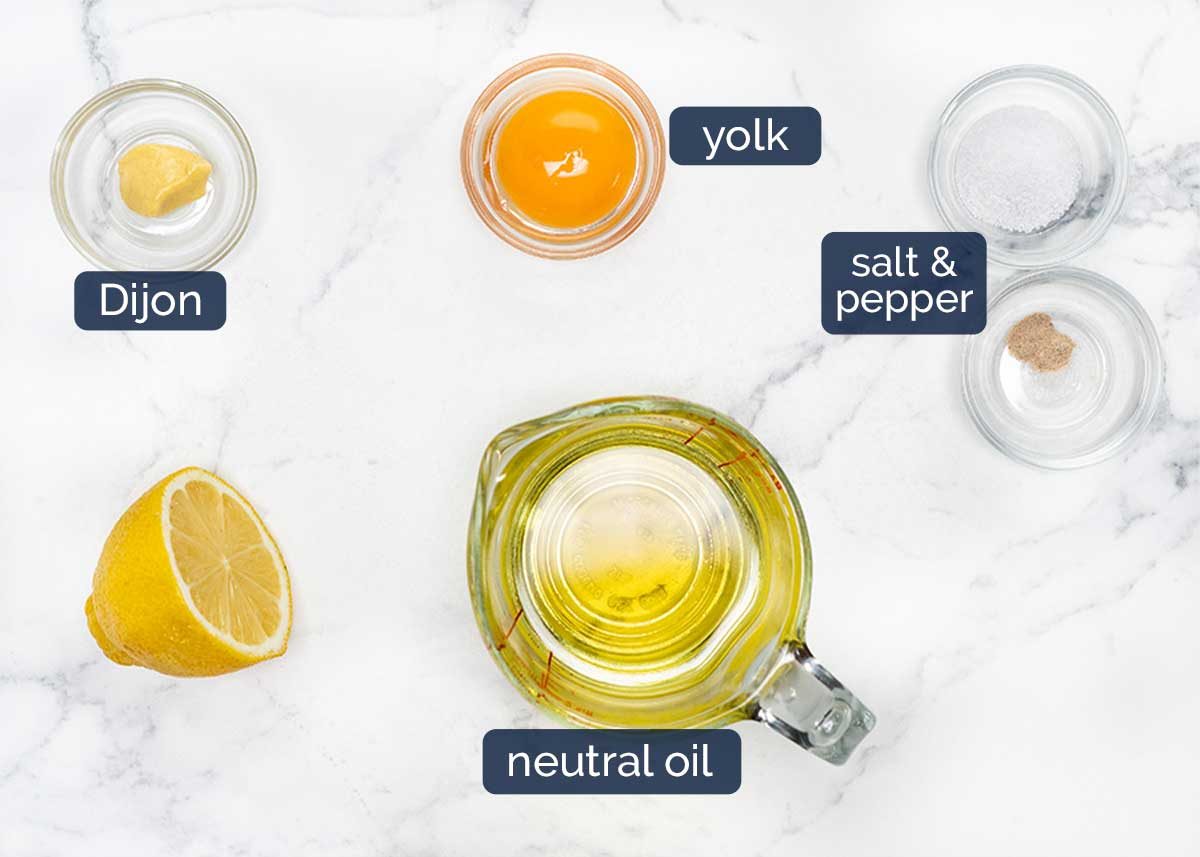
Best oil for mayonnaise – I think the best oil for mayonnaise is grapeseed oil because it has an especially clean flavour, so the mayonnaise tastes fresh rather than oily.
Otherwise, use any neutral-flavoured oil such as vegetable, canola or sunflower oil. For a non-seed-oil, light olive oil would be my first choice, or a refined avocado oil (unrefined can have a noticeable avocado/grassy flavour).
Extra virgin olive oil – I’d limit it to 50% of the oil at most, with the remainder being a neutral oil. Vigorous beating can bring out its bitterness, plus its strong flavour can overwhelm the mayonnaise.
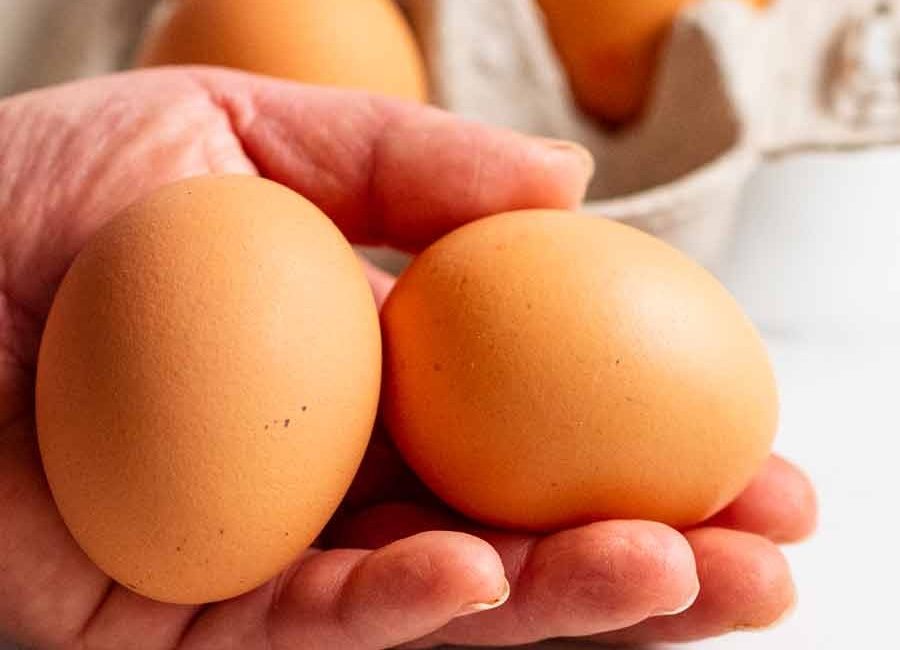
Egg yolk – From a large egg, being 50 – 55g / 2oz weight in shell, from a carton labelled “large eggs”, 600g / 24 oz for a dozen. Precision isn’t absolutely critical here – just don’t use a tiny quail egg or a giant ostrich one and you’ll be fine! 😂
Also, with the electric beater method I use, the egg does not need to be at room temperature. It can be fridge cold which is handy because eggs are easier to separate when fridge cold.
Lemon juice or vinegar – For acidity, which cuts through the richness of the oil and gives mayonnaise its characteristic tang. I usually use lemon juice for its fresher flavour, though white wine vinegar or apple cider vinegar work just as well. Regular white vinegar is a bit harsh so if that’s all you’ve got, I’d reduce down to 1 teaspoon.
Dijon mustard – Adds a little flavour and tang, and also helps stabilise the emulsion. You can’t really taste the mustard in the finished mayonnaise.
Salt and white pepper – Seasoning for the mayonnaise. I like to use white pepper so it’s not visible, but you can use black pepper if that’s all you have, or leave it out. But don’t leave out the salt, else your mayonnaise will taste bland!
a note on raw eggs 🙂
Mayonnaise is made with raw egg yolk – there’s no getting around that! So use fresh eggs and keep your mayonnaise refrigerated.
If raw egg is a concern, use pasteurised eggs if you can get them. They’re gently heat-treated to kill harmful bacteria and are available in some US grocery stores, though not in Australia (except commercially). Shop-bought mayonnaise is made with pasteurised eggs.
As a precaution, raw eggs are not recommended for those who are pregnant or with weakened immune systems.
Two caveats about my mayonnaise making method
Before I show you how I make mayonnaise, two caveats:
My beater method is foolproof IF you follow the directions to pour slowly with a thin steady stream of oil and keep the beater on. If you pour the oil in too fast, like you do your wine on a Friday night 😉, the mayonnaise will split.
It’s suited to small batches – The method I’m sharing is for a small batch using just one egg yolk, though it’s practical for up to a quadruple batch. Beyond that, there’s enough volume that a food processor becomes both practical and reliable for making large quantities of mayonnaise.
How I make mayonnaise
Here’s how I make mayonnaise. Just make sure you pour slowly in a thin stream while the electric beater is on. Do this, and you will never split your mayonnaise!
Don’t have a hand mixer? Do it by hand! Just follow the recipe as written. Keep the bowl from moving by nestling it in a damp tea towel so you can whisk consistently with one hand and pour with the other. (Or get someone to hold the bowl for you!)
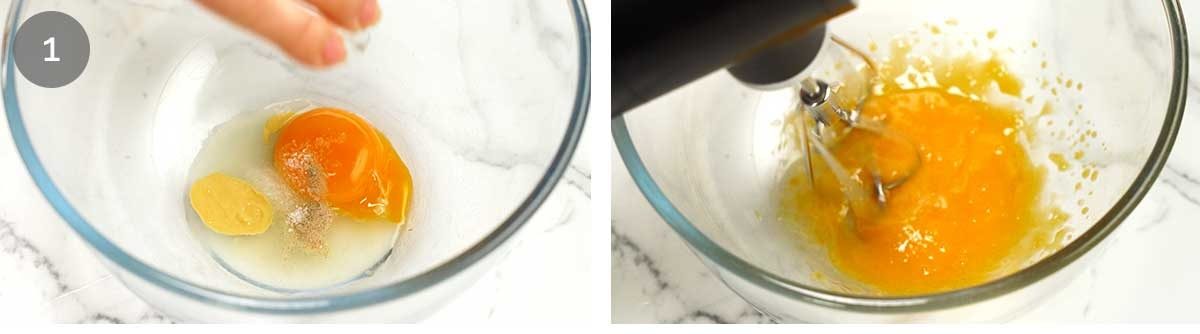
Everything except oil – Put the egg yolk, vinegar, mustard, salt and pepper in a small to medium bowl then give it a quick beat with the electric beater, just to combine. The bowl needs to be small enough so the mixture isn’t spread too thinly at the start, so the blades catch the yolk and oil.
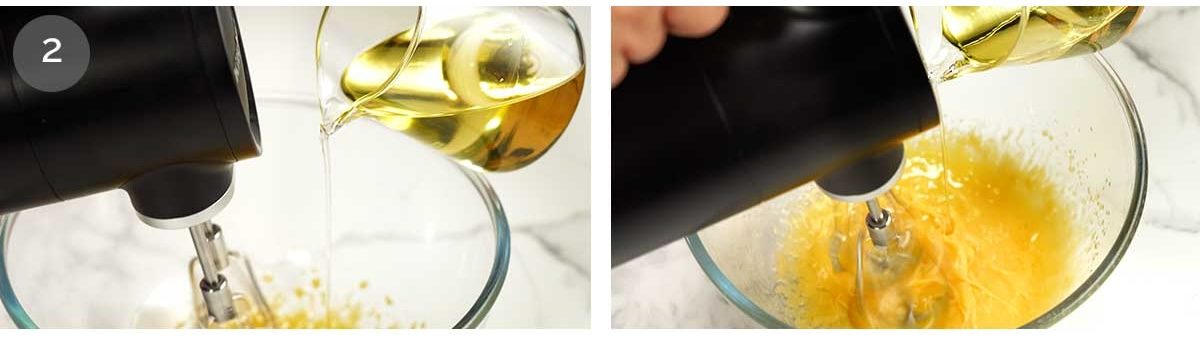
Slowly pour in oil while beating – With the beater still going on medium high speed, slowly start pouring the oil in a thin steady stream, aiming onto the whisks so the oil is immediately mixed into the egg mixture. At first, the mixture will be like a thin pale yellow pouring cream. Then as more oil gets mixed in, it will thicken into a mayonnaise consistency. Move the beater around the bowl as needed to mix the oil in.
⚠️ Pour slowly in a thin stead stream! If you pour too fast and the beating can’t keep up, the oil won’t emulsify properly and this is what causes the mayonnaise to split.
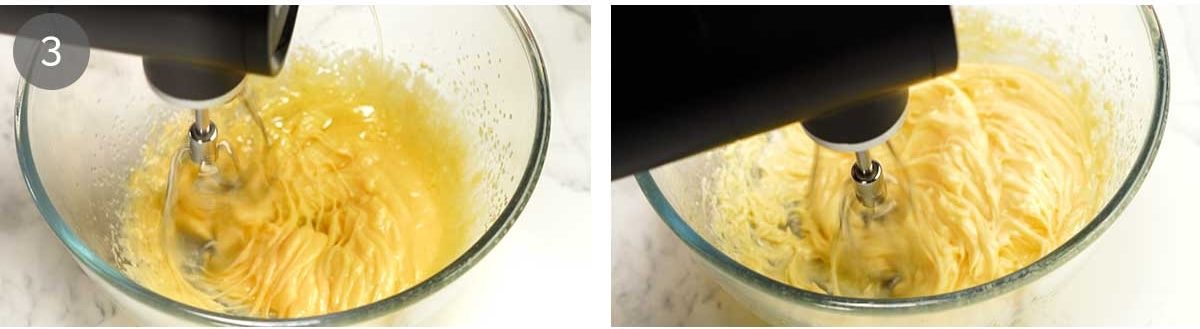
Keep pouring slowly and beating – Keep pouring slowly while continuously beating, until all the oil has been used up, and the mixture thickens into a creamy mayonnaise. Move the beater around the bowl as needed to beat in any stray rivers of oil. If you see oil pooling faster than the beaters can incorporate it, simply stop pouring and keep beating until it’s fully mixed in, then resume pouring.
⚠️ Pausing is ok. Stopping is not! You can pause briefly anytime you want or need, to adjust your grip or beat in pooling oil. But when you do, stop pouring the oil first and beat in any of the oil that was poured in. Then you can pause beating before continuing. But now is not the time to call your bestie for a long gossipy chat, or take a long bathroom break. Finish your mayo first!
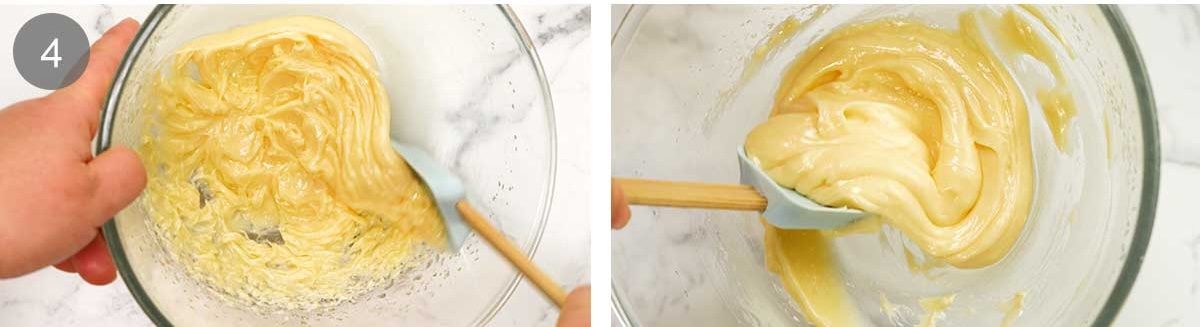
Finish – Once all the oil is poured in, give the beater a quick pass around the edges of the bowl to beat in any stray bits of oil. Then stop beating, and finish by using a rubber spatula to sweep around the bowl and mix in the last of the oil splattered on the walls of the bowl.
I finish by hand because, guess what? You can split a mayonnaise by over-beating. Though it’s less of a risk with an electric beater, it’s a higher risk with a stick blender. (Yup, been there, done that!)
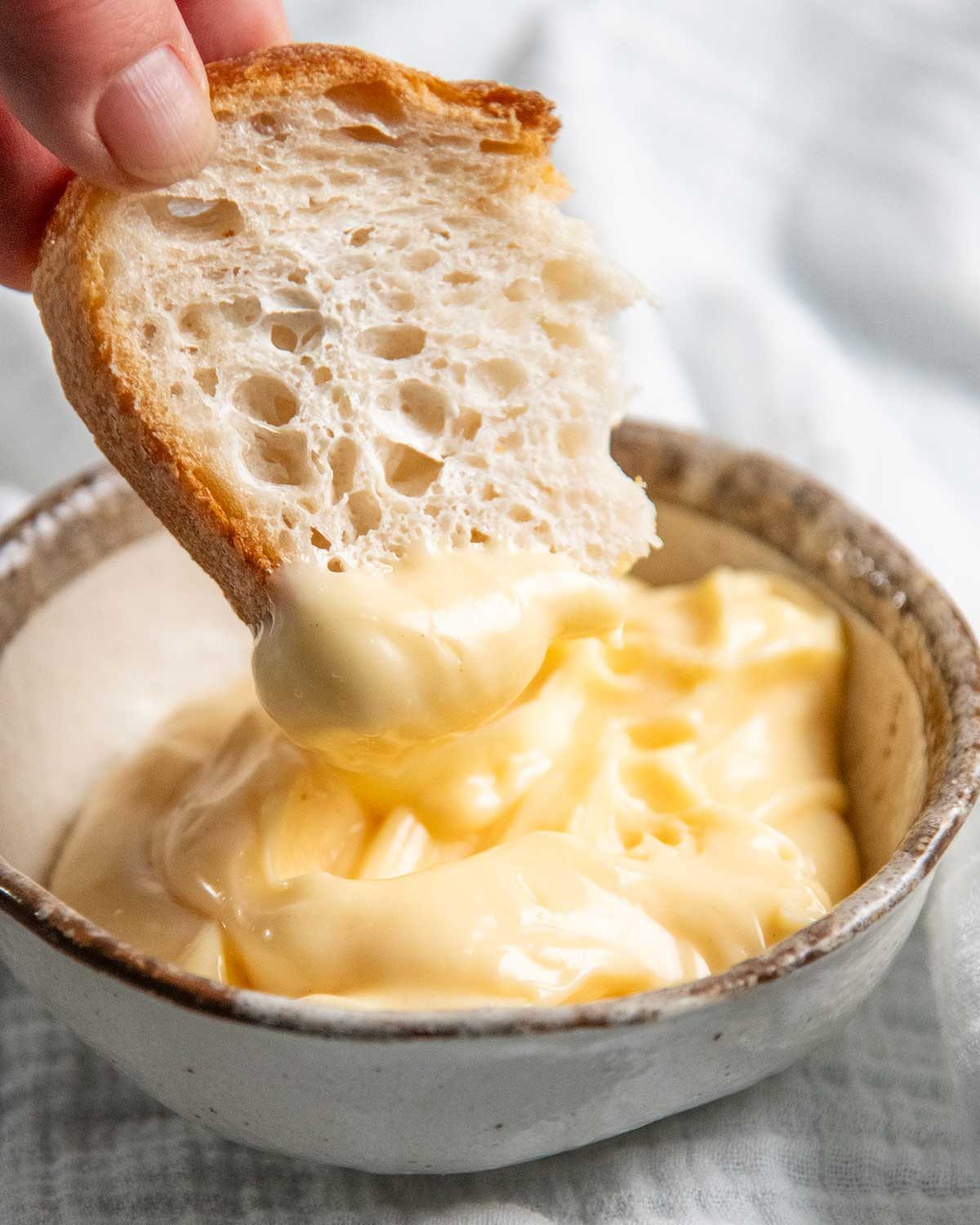
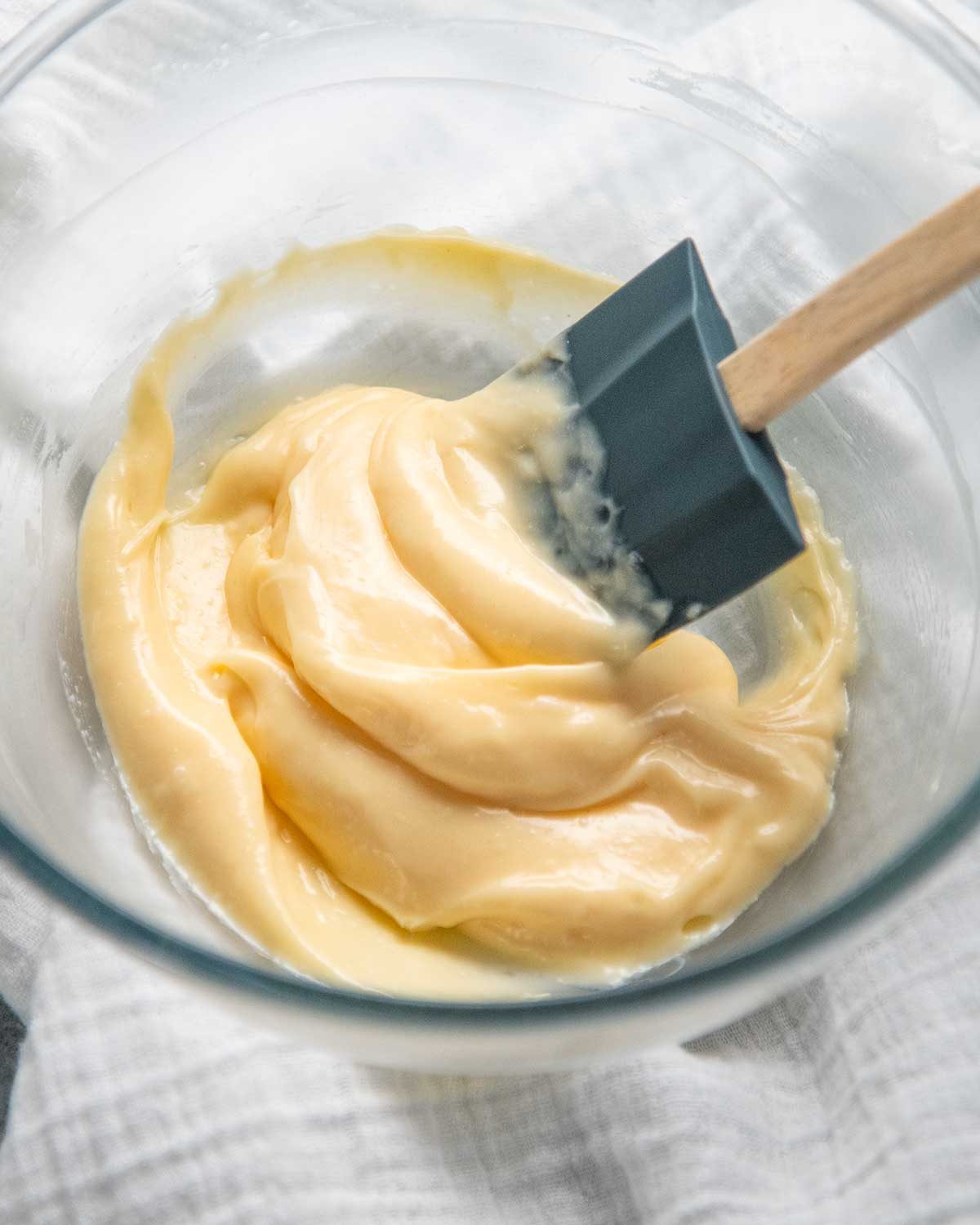
And voila! And look at that. A gorgeous, creamy mayonnaise, a gazillion times better than store bought. Stick your finger in and have a taste of your masterpiece!!! (Or be civilised and use a piece of bread)
How to use Homemade Mayonnaise
Just like you do store bought. Spread on sandwiches, use for sandwich fillings like everybody’s favourite egg and chicken sandwiches, slather on burgers. Make the most amazing creamy dressing for your favourite macaroni pasta salad, coleslaw, potato salad or caesar salad. Use it for homemade dips and sauce.
Just a few things to use homemade mayonnaise for!


Whatever you use it for, I can promise you this – it will elevate it, exponentially. But don’t believe me. Make it – I mean, it literally takes 3 minutes, you’ve got nothing to lose. And you’ll see for yourself!! – Nagi x
Homemade Mayonnaise FAQ
I like it because it’s more reliable than other common methods for mayonnaise making for a small batch recipe, including a stick blender, food processor and blender which are more prone to problems especially for first timers.
My method is essentially relying on the convenience of an electric beater rather than hand whisking, and here’s why I like it:
Avoids the common pitfalls with a stick blender and food processor which causes the mayonnaise to split – eg. the blades don’t catch on the yolk at the beginning, the stick blender is pulled up too quickly, or the mayonnaise is over blitzed. I’ve created a separate FAQ below for each of these appliances to explain further.
You can clearly see what you’re doing and how the mayonnaise is coming together, because you’re mixing in a bowl;
It’s easier to mix and scoop the mayonnaise out at the end, compared to a food processor or tall narrow jars for stick blenders; and
Easier washing up than using a food processor.
And as I mentioned upfront, I have split mayonnaise using every other method (stick blender, food processor, blender) for various reasons – because a number of things can go wrong, often relating to the size, power or how the appliance is used.
But I have never split mayonnaise using an electric beater!
Note: I do use a food processor for larger batches, though you could also use a stand mixer. Directions are in the recipe card.
I keep homemade mayonnaise for 3 days in the fridge, in an airtight container. Some sources say longer, but because it contains raw egg yolk, I prefer to err on the safe side.
And no, the vinegar doesn’t magically make the raw egg safe! There isn’t enough in mayonnaise to rely on it as a preservative.
It is not suitable for freezing, it runs a high risk of splitting when you mix after thawing.
Mayonnaise splits when the oil doesn’t emulsify properly with the other ingredients. The most common culprit is adding the oil too quickly compared to the speed at which the mixture is being mixed, so the egg yolk can’t keep up and incorporate it.
This is why I bang on about pouring the oil in a very thin, steady stream, especially at the beginning. Once the mayonnaise starts to thicken and you’ve got a stable emulsion going, you can pour a little faster.
But, there are more things that can go wrong that can cause mayonnaise to split if you are using a stick blender, hand whisking, blender or food processor. Cold eggs, over-mixing, using the wrong shape jar for stick blenders. See sections below.
Yes, you can save it! Put a fresh egg yolk in a clean bowl, then start beating with an electric beater while very slowly adding the split mayonnaise, just as though it were the oil in the original recipe.
Start with just a few drops at a time until it begins to thicken, then continue adding the split mayonnaise in a thin, steady stream. It should come back together into a lovely creamy mayonnaise.
Annoying to use another egg yolk, yes. Better than throwing the whole lot out, also yes!
Homemade mayonnaise is traditionally made with raw egg yolk, so the safest option during pregnancy is to make it with pasteurised eggs, which have been heat-treated to kill harmful bacteria without cooking the egg.
Store-bought mayonnaise is generally made with pasteurised eggs, which is why it is typically considered safe during pregnancy. For homemade mayonnaise, use pasteurised eggs, else to err on the side of caution, steer clear of it.
The stick blender is a method that does work and for experienced cooks, it’s a handy quick way to make it – though I recommend doubling this recipe as a mini (to ensure there is sufficient yolk to catch on the blades).
But for a single batch, and for first timers, it is more prone to errors than using an electric beater that will cause the mayonnaise to split. Here are the things that can go wrong:
With the popular all-in-a-jar method, it will split if the egg yolk doesn’t catch properly in the blades at the start. This can happen if:
you don’t use a narrow jar that just fits the head of the stick blender (wider jar = egg spread thinner = doesn’t catch on blades);
the blades are set higher in the stick blender head due to the design of the stick blender (this is more common than you think); or
if you’re making a classic mayonnaise using a yolk only rather than whole egg (as there is less volume at the start for the blades to catch).
If you lift the stick blender up too quickly before a stable emulsion has formed, it will split.
If you mix for too long, it will split. Stick blenders are more high powered than electric beaters, and and especially blitzing in a small confined space.
The mayo can thicken too quickly and get caught in the blades, so it won’t draw in the remaining oil.
For confident cooks, I’ve included stick blender directions in the recipe card as an option. But a reminder: double the recipe! It’s risky making a single batch as one yolk is insufficient to catch on the blades.
I use a food processor to make large batches of mayonnaise – a quadruple batch (4 egg yolks) or more. I’ve popped directions in the recipe notes for this.
I don’t recommend using a food processor for a single batch because the yolk won’t catch properly on the blade at the beginning which will cause the mayonnaise to split. This is a risk even with mini food processors.
Also, I just hate washing food processors. They’re so big and bulky! I always stick it in the dishwasher and it takes up so much space!!
Here are my thoughts on these other appliances:
Blender – The mayonnaise gets too thick and caught up on the blades before all the oil is poured in.
NutriBullet and similar appliances – Similar to the blender, where the blade is on the base of the appliance, the mayonnaise will thicken on the blades. Also, you can’t pour oil in through a feeder with a NutriBullet.
Stand mixer – I haven’t tried because I don’t think it will work for a small batch. The reason is because my stand mixer is designed so it has a little hump on the base of the bowl that the whisk touches when I lower the head to use it (I have a KitchenAid). So the whisk won’t catch on things in the bowl unless there is sufficient volume – I think, around 6 yolks? But if you are making a large batch and don’t have a food processor, I am very confident the stand mixer will work.
Watch how to make it
Hungry for more? Subscribe to my newsletter and follow along on Facebook, Pinterest and Instagram for all of the latest updates.
Mayonnaise
Ingredients
- 1 egg yolk from a large egg (~50 – 55g / 2 oz), fridge cold is fine
- 1 1/2 tsp lemon juice or white wine vinegar or apple cider vinegar, plus more as desired
- 1/2 tsp Dijon mustard (substitute yellow mustard, not hot English mustard)
- 1/4 tsp heaped cooking salt / kosher salt
- Pinch white pepper (substitute black pepper – but they will be visible)
- 2/3 cup grapeseed oil or other plain flavoured oil , or up to 50% extra virgin olive oil (Note 1)
Instructions
My electric beater method (safest, easiest):
- Mix yolk – Use a small to medium bowl. If it's too big, the mixture will be too thinly spread at the start for the yolk and oil to catch on the beater. Place everything except the oil in a bowl. Give it a quick beat with an electric beater to combine the ingredients.
- Slow pour and constant beating – With the electric beater running on medium-high (speed 8 of 10), start pouring in the oil in a thin, steady stream. Aim for the beaters so it's mixed in straight away and move the beater around the bowl as needed to beat the oil in. Continue with the remaining oil in the same thin stream, pausing the pour whenever needed to give the mayonnaise a chance to catch up and absorb the oil before adding more.
- Finish by hand – Stop beating once all the oil is added and beaten in, do not keep beating unnecessarily (it can make it split). Use a rubber spatula to scoop around the bowl to catch any residual oil splatters and mix it in.
- Voila! Homemade mayonnaise! It should be the consistency of softened butter. Use as you do shop-bought mayonnaise, though it's so beautiful you could even just spread it on warm bread like butter (Try it. It's amazing!)
Hand whisked (requires arm stamina!):
- Follow the same steps as the electric beater but use a hand whisk instead. While constantly whisking, pour the oil in a thin steady stream onto the spot where the whisk is moving. Set your bowl on a damp tea towel to stop it from moving.
Recipe Notes:
Nutrition Information:
Life of Jaffle
He finally swam on the weekend!!! After weeks and weeks of wading out as far as he possibly could while keeping all four paws firmly planted on the sand, he finally took the plunge. And only because I was out in the water and he wanted to get to me. 😂 Which was sweet – until he paddled over and scratched my legs to shreds. 😩

(That’s the only photo I got because I was too busy protecting my legs).
Nagi!!!!
You’re the best! Thank you for sharing your great recipes! These are always easy to follow, using common household ingredients and as an added bonus, advice as to HOW and WHY to perform steps as written!!! Plus, the human element of Nagi and Jaffle (Dozer). You make my heart happy with each post. Thank you! Amy
HELP~! I was very excited to try this and even bought the grapeseed oil. Did everything per the instructions and video but it never progressed beyond a liquid state.
What could I have done wrong? Was using KitchenAid hand mixer.
Also, in recipe, Prep and Total times both say 5 minutes. In the video it looks like you only beat it for about 15 seconds. During my attempt, even by 6 minutes of mixing – nothing. Any suggestions as to where I might have gone wrong?
(Purposely not rating as I have never had one of your recipes fail so for now I am willing to assume that I am at fault somehow.)
Thank you~!
I used my stick blender (very carefully) with Canola Oil and it was so thick it was like margarine. Was making your prawn cocktail, so thinned it down with tomato sauce and lemon juice. It was delicious, thank you.
I’ve never had trouble with a stick blender but thought I’d try Nagi’s way! Used Macadamia nut oil as it is healthy.
Corn oil
Canola oil
Soybean oil
Vegetable oil
Peanut oil
Grapeseed oil
Rice bran oil
Cottonseed oil
Sunflower oil
Safflower oil
Margarine
Shortening
Vegetable spreads or any fake butter are highly processed, genetically modified, highly toxic, full of chemicals & are not good for the body! I wish Nagi would stop using these in her amazing recipes!
I know right Leanne! Never used macadamia nut oil, but Light Olive oil (not reg, because it ends up tasting like salad dressing) or Avocado oil does the trick! Pls never use vegetable or seed oils (GMO, pesticides, chemicals, yuck).
Love this recipe (always use stick blender tho!😂)
I’m usually a big fan, every recipe I’ve tried of Nagi’s just worked. Except this one unfortunately. It just never thickened up at all.
Forgot the rating
Hi Nagi, I’ve been making the stick mixer mayo every week for years. When I saw yours I thought I’d better give it a try as I trust you completely with anything food! Well, I’ve just made a double batch and it’s turned out perfectly, way, way better than before. Thanks for upgrading me! Pip
Made the mayo. I must say it was quite easy. I used an avocado oil which made it taste quite oily. Not great to be honest. I am going to try grapeseed oil next time. Mine is also not as thick as store bought. Does anyone know how to get it a bit thicker.
We are raising chickens for the first time and are excited about using our own free range eggs to make this mayo!
Thank you for sharing! 🙂
Nagi,
Have you ever tried a Bamix Immersion Blender? I bought one years ago and it is wonderful. The whole thing is waterproof. Makes excellent mayo. I’d like to see you have success with this tool! ❤️
Here is a blurb from Bamix explaining why their immersion blender makes great mayo in 25 sec. PS I’m not affiliated w/Bamix.
“Two things matter for mayo: the blade design and the speed. The bamix® multi-purpose blade with its cutter guard creates exactly the bottom-up vortex this (mayo) recipe relies on. And at 12,000 rpm on speed 1, it is fast enough to emulsify but not so violent it whips air into the mayo and turns it pale and foamy.
Cheap stick blenders without a cutter guard tend to throw oil to the sides instead of pulling it down, which is exactly why their mayonnaise breaks.”
Hey Nagi, if I used Tarragon vinegar in your mayonnaise recipe would that come close to being a Bernaise Sauce?
Cheers, deb.x
Love mayonnaise so looking forward to trying this recipe. Thanks. Good on Jaffles with his swimming. He is mega cute! 😍
It’s great to see Jaffle getting his swimming legs out!
He is so beautiful. I think he is a water dog? now he has a taste of the water, there is no stopping him
I have just made this for chicken burgers for tonight but it is not thick, it is watery. I measured everything. What have I done wrong??? 😢
Mine too is watery even after adding an extra egg yolk 😭
Hi Patricia – oh no! Were you pouring slowly like you see me do in the video? So, a needle thin stream of oil while beating, and making sure the oil is being beaten in as you go.
Not Patricia but I thought I was pouring it in very slowly but next time I think I will use a pipette or a dropper. Good eggs are pricey for something that unfortunately can’t be resurrected or turned into something else.
I am glad Jaffle finely made the plunge !
So am I! Dozer was looking down with approval 🥰
Adore Nagi but please just use light olive oil. Seed oils (vegetable oils) are so very dangerous your health in so many ways!
Thanks for your input Amanda! Appreciate it 🙂 – N x
I do love you Nagi, would just love you to start using healthy oil. ❤️❤️
Yes! Seed oils ruin our health in so many ways & sadly it’s in everything.
Hi Nagi, so pleased to see that I actually make mayo the way an expert does! I put my bowl in the sink on a folded tea towel on a slight angle which I find helps when making a small batch. And if you can get your hands on tarragon vinegar (I grow French tarragon so I can make my own), it takes it into the stratosphere!
That’s a great idea Heather!! I’ll try that the next time I hand whisk 🙂
Yeay Jaffle!Though I’m sorry about your legs . .
I was confuse with the email subject : White Chocolate Raspberry Muffins
But then read about mayonnaise I was wonder what the connection with mayonnaise and the muffin, whether its new improvement but seems too far . Turn outs there is no connection, just wrong subject lol🤣😅
Yeay Jaffle! I’m sorry about your legs . .
I was confuse with the email subject : White Chocolate Raspberry Muffins
But then read about mayonnaise I was wonder what the connection with mayonnaise and the muffin, whether its new improvement but seems too far. Turn outs there is no connection, just wrong subject lol🤣😅
Ha ha yes Nind, just me sending out the wrong subject line! 😂 Definitely no mayonnaise in the muffins!! – N x